Play-based learning is making a comeback. At TLH, it never left.
Long before play returned to the national conversation about kindergarten, The Learning Habitat was built on a simple principle: children learn deeply when academic purpose, movement, imagination, exploration, and joy work together.
An Education Week explainer published in October 2025 describes play-based learning as a practice returning to kindergarten after years of increasingly academic expectations. As standardized instruction and accountability expanded into the early grades, many classrooms replaced imaginative play, creative centers, movement, and social learning with more passive, large-group instruction.
Now, educators and policymakers are reconsidering that shift. Several states have formally encouraged or required play-based learning in the early grades. The renewed attention is welcome. But at The Learning Habitat, this is not a new initiative or a response to a trend. It is how we have always understood children and learning.
Play and rigor are not opposites.
Purposeful play asks children to make decisions, test ideas, solve problems, communicate, revise, collaborate, and persist. Those are not breaks from learning. They are some of the most demanding forms of learning young children do.
Play-based does not mean hands-off
Education Week distinguishes free play from guided play. Free play gives children room to imagine, socialize, and build confidence without a predetermined academic target. Guided play adds intentional teacher support: educators design the environment, introduce materials or a challenge, observe closely, and ask questions that help children develop specific skills.
Both forms have value. A child building with blocks may be exploring freely, but a teacher can extend the experience by asking what will make the structure stable, how many pieces are needed, or what might happen if a heavier block is placed on top. The activity remains playful and child-centered while also engaging prediction, spatial reasoning, mathematics, language, and persistence.
The article cites a 2022 review of 39 studies involving children through age 8. That review found guided play had stronger positive effects than direct instruction for early mathematics, shape knowledge, and the ability to shift between tasks. The point is not that direct instruction has no place. It is that young children do not need to choose between joyful learning and meaningful academic growth.
Purposeful academics, experienced through childhood
Child-led, teacher-guided
Our teachers meet learners where they are, follow meaningful questions, and guide each child toward clear academic and developmental goals.
Hands-on by design
Creative and critical-thinking lessons give students something real to investigate, build, test, discuss, revise, and understand.
Movement belongs in learning
Required outdoor play and break time are part of every class because physical, emotional, and intellectual development are connected.
Small groups make it personal
Small classes allow teachers to observe closely, differentiate instruction, and respond to the learner rather than forcing every child through the same experience.
The outdoors is one of our learning environments
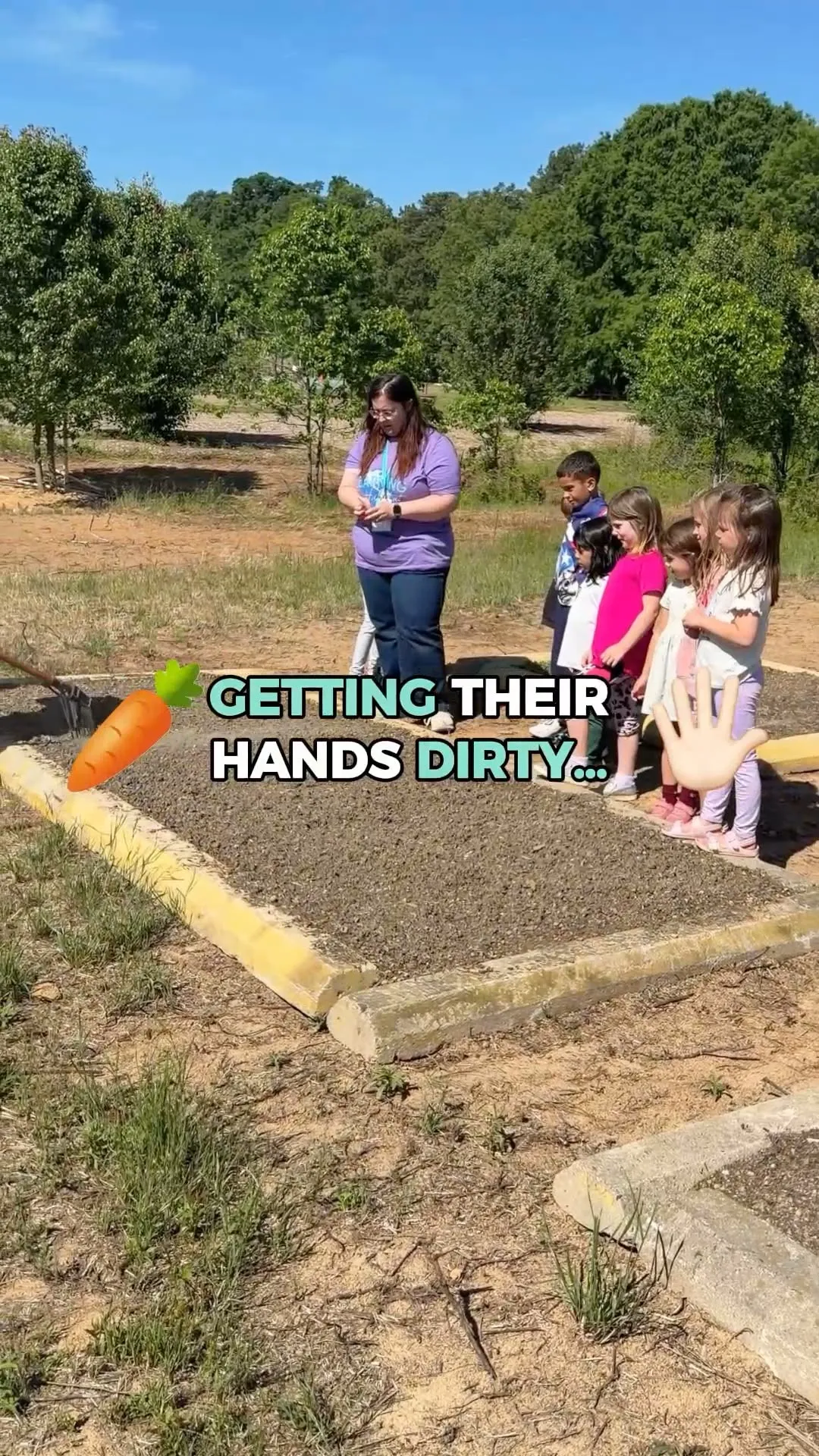
At TLH, play-based learning naturally extends outdoors. In our Forest Immersion Program, science, English language arts, history, art, and environmental education connect with hiking, experiments, nature exploration, problem-solving, and play. Students make academic connections under the trees, in the creeks, and in the mud.
That does not reduce the importance of reading, writing, or mathematics. It gives those subjects context. A child can read for information before an investigation, measure materials while building, document observations in writing, explain a strategy to a peer, or revise a plan after it fails. The experience makes the academic work purposeful.
What children practice through play
- Creative and critical thinking
- Communication and collaboration
- Problem-solving and flexibility
- Confidence and independence
- Self-regulation and persistence
- Curiosity and motivation to learn
Kindergarten should prepare children without erasing childhood
Families want children to become capable readers, writers, mathematicians, and thinkers. We want that too. The mistake is assuming that the youngest learners reach those goals best by making school look more like the upper grades.
Young children need explicit teaching, and they also need room to move, imagine, create, negotiate, experiment, and wonder. At TLH, those needs have never been treated as competing priorities. Our approach combines differentiated academics with the joy and developmental power of play.
Play-based learning may be making a comeback nationally. Here, it has always been part of helping children love learning again.
Source
Heubeck, E. (2025, October 21). Play-Based Learning in Kindergarten Is Making a Comeback. Here's What It Means. Education Week.